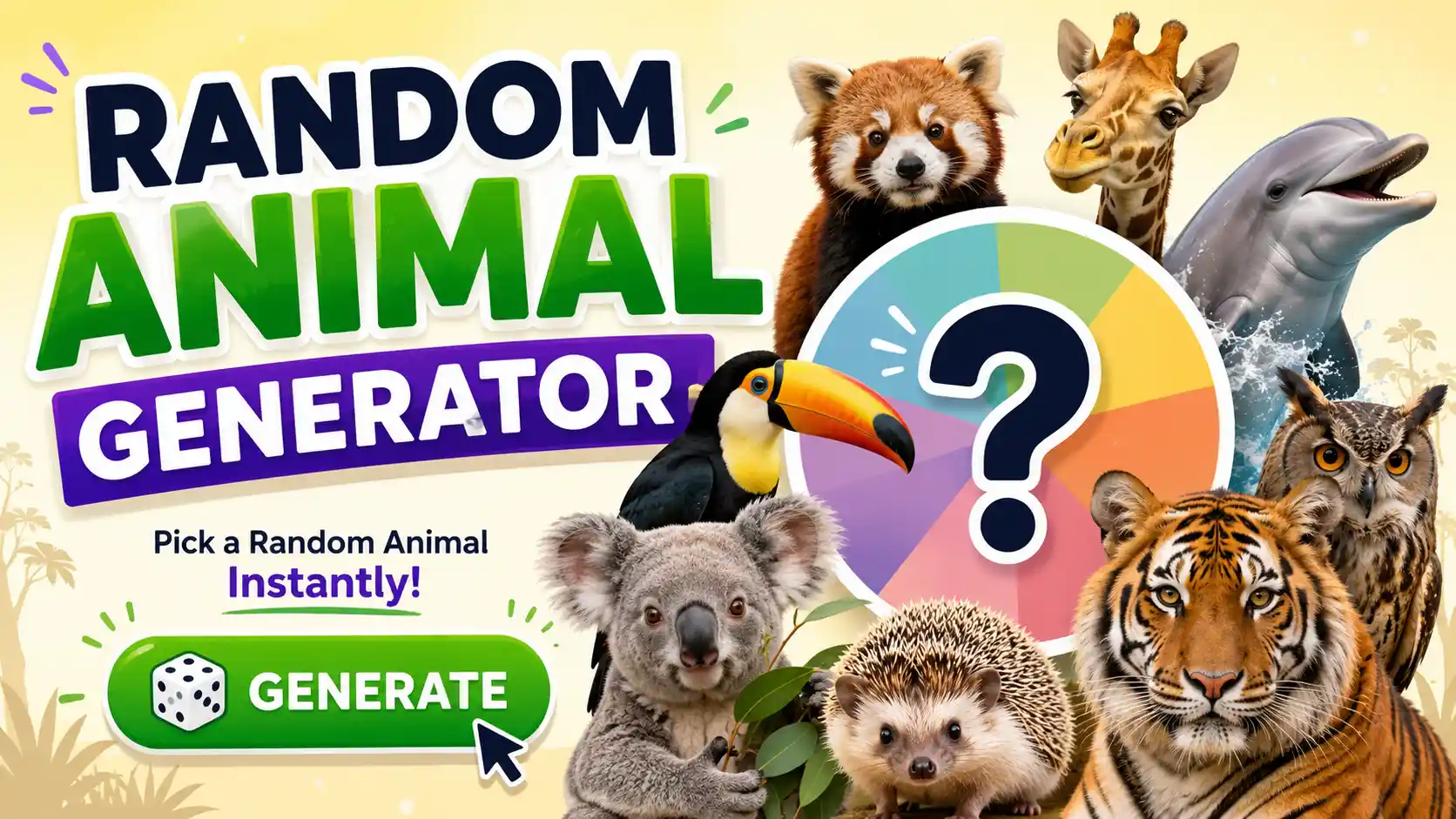
Need an animal for a drawing challenge, classroom activity, story idea, game, or quick decision? This random animal generator chooses an animal for you within seconds, so you do not have to spend time thinking through every possible species.
Simply use the generator and view the selected animal in the result area. Generate again whenever you need another idea, a new creative prompt, or an unexpected animal to research.
Quick Answer
A random animal generator selects one animal from a prepared list using a random selection process. It helps artists, students, teachers, writers, gamers, and curious users pick an animal quickly for creative activities, lessons, research, and entertainment.
What Is a Random Animal Generator?
A random animal generator is an online tool that picks an animal without asking you to choose one manually. Each time you activate the generator, it selects an animal from the available database and displays the result.
You can also think of it as an animal randomizer, random animal picker, or animal species generator. Its main purpose is simple: remove personal choice from the process and give you an unexpected animal.
The tool can be useful when you have too many options, cannot think of an animal, or want a result that is not influenced by your usual preferences.
What Problem Does This Animal Generator Solve?
Choosing an animal sounds easy until you need an original idea. People often repeat familiar choices such as cats, dogs, lions, or elephants. This can make drawing prompts, classroom exercises, writing activities, and games feel predictable.
The generator solves this problem by making the choice for you. Instead of reviewing long animal lists, you can generate a result instantly and focus on the activity itself.
It is particularly useful when fairness matters. For example, a teacher can use a random result rather than choosing a favorite animal for a student activity.
How to Use the Random Animal Generator
The tool is designed to be simple enough for beginners, children, students, and general users.
- Open the generator. Go to the tool section at the top of the page.
- Select any available option. If the tool provides a quantity, group, or category control, choose the option that fits your activity.
- Click the generate button. The animal randomizer will select an animal from its available list.
- Read the result. Use the displayed animal as your drawing subject, lesson topic, story prompt, game answer, or research idea.
- Generate another animal. Run the tool again whenever you want a different result.
Helpful tip: Write down each result when creating a list. Repeated generation may eventually select the same animal again.
How Does the Random Animal Picker Work?
The generator stores a list of animal names. When you use the tool, a randomization method selects one position from that list and displays the animal stored in that position.
A common random-selection method can be explained with this simple formula:
The random value is usually a decimal from zero up to, but not including, one. The total number of animals represents the number of available entries in the tool’s database.
For example, if a database contains 500 animals, the system generates a random value and converts it into a valid position between the first and final animal in the list.
This process is generally called pseudorandom selection. It is suitable for drawing prompts, games, education, creative challenges, and everyday decisions, although it should not be treated as a secure scientific sampling system.
Key Features of This Random Animal Generator
Instant Animal Selection
The generator removes the need to search through lists or think of an animal yourself. One action gives you an immediate result that you can use as a prompt.
Repeatable Random Results
You can generate additional animals whenever one result is not enough. This makes the tool suitable for creating lists, assigning several prompts, or running multi-round games.
Simple Result Display
The selected animal is presented clearly so users can identify the result quickly. A straightforward result area is especially useful for younger users and classroom activities.
Useful Across Different Activities
The same animal generator can support art practice, writing prompts, biology lessons, guessing games, character concepts, and general entertainment.
Unexpected Creative Prompts
Random selection can introduce animals that you would not normally choose. This helps reduce repetitive ideas and encourages users to explore unfamiliar species.
Why Use a Random Animal Generator?
The main reason to use the tool is to make a decision quickly. You do not need to compare hundreds of species or ask someone else to name a random animal.
It also adds surprise to an activity. A random result can make a drawing challenge, classroom lesson, party game, or writing exercise more interesting because nobody knows which animal will appear next.
The tool can also reduce creative bias. Artists may repeatedly draw animals they already understand, while writers may rely on familiar creatures. A random result encourages experimentation.
- Save time when choosing an animal.
- Break drawing or writing blocks.
- Create fair classroom assignments.
- Add variety to games and challenges.
- Discover animals to research.
- Generate unexpected creative ideas.
Practical Example
Suppose an artist wants to complete a seven-day animal drawing challenge but cannot decide what to draw. The artist can generate one animal each day and use every result as the subject of that day’s sketch.
If the first result is an otter, the artist might draw a realistic river otter, a cartoon character, or an otter-inspired fantasy costume. The generator provides the starting point, while the artist decides how to interpret it.
Example activity:
Generate one animal → Research its main features → Draw it in your preferred style → Generate a new animal for the next challenge.
Random Animal Generator for Drawing
A random animal generator for drawing helps artists choose a subject without overthinking. It can support warm-up sketches, daily art practice, character design, classroom projects, and timed drawing challenges.
For a simple exercise, generate one animal and draw it from memory. Then compare your drawing with a reliable reference image to identify features you remembered or missed.
You can also make the challenge more creative by adding a separate style, emotion, occupation, or setting. For example, combine a randomly selected animal with ideas such as astronaut, detective, medieval, sleepy, or underwater.
How Teachers and Students Can Use It
Teachers can use random animals as lesson starters, research assignments, vocabulary prompts, or group activities. Each student can receive a different animal to investigate or describe.
Students can research an animal’s habitat, diet, body structure, behavior, predators, and conservation status. This turns a simple generated result into a broader science or writing exercise.
For younger children, the selected animal can be used for spelling, sound recognition, storytelling, coloring, or classification activities.
| Activity | How to Use the Result |
|---|---|
| Biology research | Research habitat, diet, behavior, and classification. |
| Creative writing | Write a short story featuring the selected animal. |
| Vocabulary practice | Describe the animal using five adjectives. |
| Art lesson | Draw the animal realistically or in a cartoon style. |
| Classification game | Identify whether it is a mammal, bird, reptile, fish, amphibian, or invertebrate. |
Creative Ways to Use a Random Animal
Story and Character Ideas
Writers can turn the selected animal into a main character, companion, symbol, villain, or fictional species. The result can also inspire personality traits based on the animal’s behavior.
Party and Classroom Games
Use the generated animal for charades, guessing games, twenty questions, drawing contests, or animal-sound challenges.
Logo and Mascot Inspiration
Designers can use a random species as the starting point for a fictional mascot or practice logo. A generated animal may encourage a concept outside the designer’s usual choices.
Research Prompts
Generate an animal and investigate where it lives, what it eats, how it protects itself, and whether its population is threatened.
Daily Creative Challenges
Pick a random animal every day and use it for a sketch, poem, short fact sheet, digital illustration, or social media post.
Who Can Use This Animal Randomizer?
The tool can be used by artists, students, teachers, parents, writers, game hosts, designers, content creators, homeschoolers, researchers, and anyone who wants to pick a random animal.
It is suitable for both quick entertainment and structured activities. The result is only a starting point, so users can adapt it to their age, subject, skill level, or creative goal.
Common Mistakes to Avoid
Assuming Every Animal Is Included
No animal database can guarantee that it contains every known species. The range of possible results depends on the names included in the tool’s current list.
Expecting Every Result to Be Unique
Random selection can produce the same animal more than once. Repetition does not necessarily mean the tool is broken. Record previous results if you need a unique list.
Using the Result as a Scientific Sample
The generator is useful for prompts and casual selection, but it should not replace formal sampling methods for scientific, statistical, or conservation research.
Confusing Real Animals With Fantasy Creatures
A general animal generator should not be assumed to create mythical creatures, hybrids, body-part combinations, or invented species unless the interface clearly includes those modes.
Relying on the Name Without Further Research
If you use the result for an educational project, verify facts through reliable zoology, museum, university, or conservation sources.
Helpful Tips for Better Results
- Generate several animals and choose one only when your activity allows selection.
- Write down previous results when building a non-repeating list.
- Use each animal as a starting point rather than a complete creative idea.
- Research unfamiliar species before drawing or describing them.
- Add a second prompt, such as a color, job, location, or emotion.
- For group activities, generate one result per person or team.
- Set a time limit to make drawing and guessing games more challenging.
Is a Random Animal Generator Truly Random?
Most online generators use pseudorandom algorithms. These algorithms create results that appear unpredictable during normal use, although they are produced through computer instructions rather than physical randomness.
This level of randomness is more than sufficient for art prompts, games, classroom tasks, writing ideas, and entertainment. However, it should not be used for high-stakes decisions or formal scientific sampling.
It is also normal for an animal to appear again after several attempts. Random does not mean that every result must be different from all earlier results.
Limitations of the Tool
The quality and variety of results depend on the size and accuracy of the animal database. A smaller list may produce repeated results more often and may not include rare or recently classified species.
This page should only be described as a random animal name picker unless the live interface visibly provides additional functions. Features such as animal pictures, spinning wheels, category filters, hybrid creation, body-part combinations, sound effects, and downloadable files require separate tool support.
The generator provides a prompt rather than detailed zoological information. Users should consult trustworthy references when they need scientific facts, correct classifications, conservation status, or accurate visual references.
Pick a Random Animal Now
This random animal generator offers a fast way to choose an animal for drawing, teaching, writing, research, games, and creative challenges. It removes the pressure of making a choice and gives you an unexpected starting point.
Use the generator, view your result, and generate again whenever you need another animal. A single random selection may be enough to start your next sketch, lesson, story, or activity.
Frequently Asked Questions
What is a random animal generator?
A random animal generator is a tool that selects an animal from an available list. It can be used for drawing prompts, games, lessons, writing exercises, research topics, and entertainment.
How do I pick a random animal?
Use the generate button in the tool area. The animal randomizer will choose one animal from its database and show it in the result section.
Can I use the random animal generator for drawing?
Yes. Artists can use each generated animal as a sketch subject, character idea, daily drawing challenge, or starting point for a creative design.
Can children use this animal generator?
Yes. Parents and teachers can use random animal results for spelling, drawing, storytelling, research, classification, and classroom games appropriate to the child’s age.
Can the same animal appear more than once?
Yes. Random selection can produce repeated results. Keep a written list and generate again if your activity requires a different animal each time.
Does the tool generate extinct, mythical, or hybrid animals?
Only if those categories are specifically included in the live tool. A standard random animal generator should be treated as a picker for real animal names unless additional modes are clearly shown.
Is the random animal generator free?
The page is intended to provide quick online animal selection. Confirm any usage limits or premium restrictions shown in the live interface before describing access as unlimited.
Useful Animal & Random Generator Tools
If you are using the Random Animal Generator, these related tools can help you find pet names, dog names, cat name ideas, and random creative choices.
- Pet Name Generator – generate cute and playful names for pets and animal characters.
- Dog Name Generator – find friendly and memorable name ideas for dogs.
- Best Cat Names – explore helpful cat name ideas for real pets or fictional characters.
- Yes No Picker Wheel – useful for making quick random choices and fun decisions.