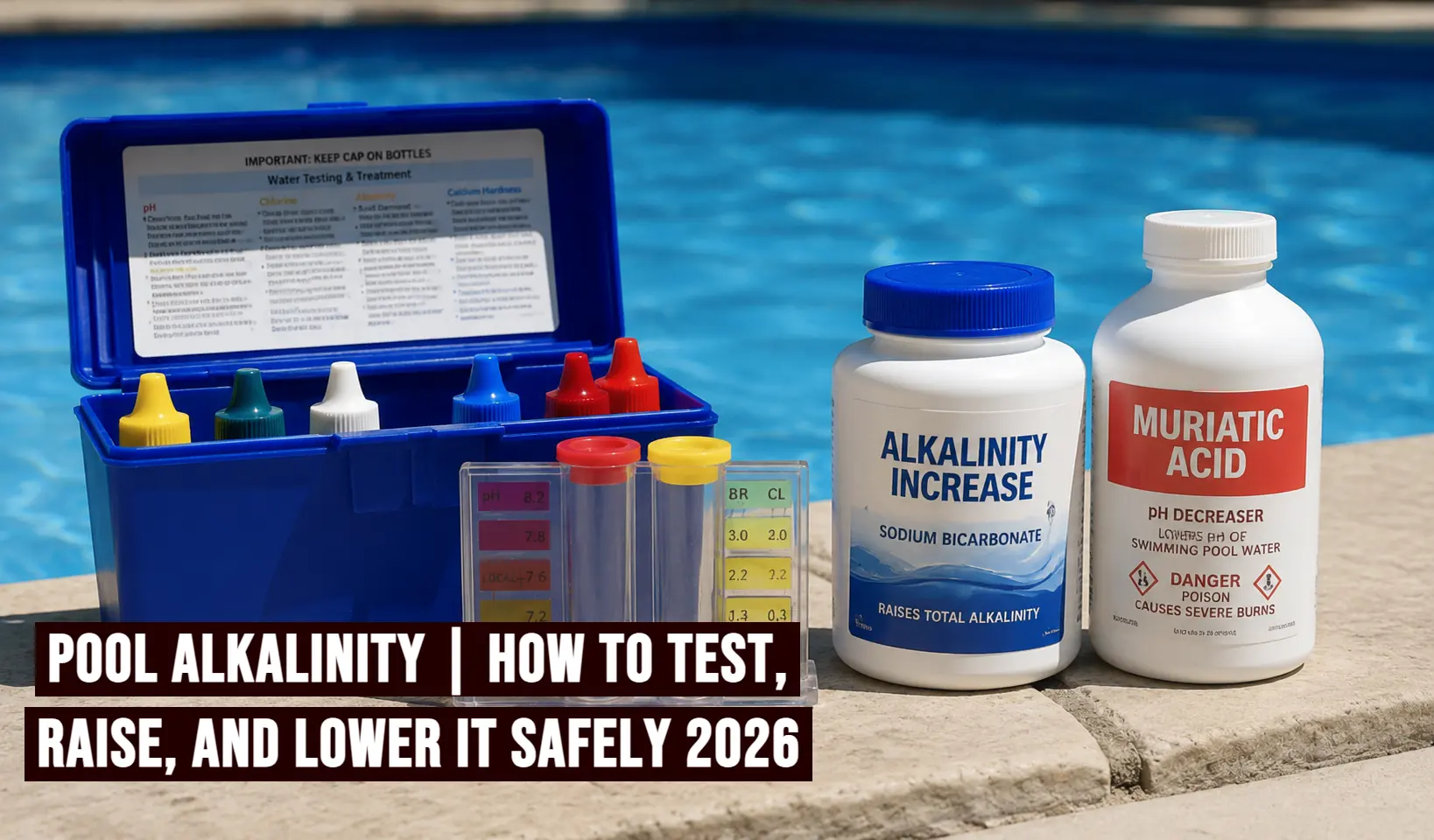
Pool alkalinity controls how stable your pool water feels, tests, and responds to chemicals. When it sits in the right range, pH stays easier to manage, chlorine works more predictably, and the water feels more comfortable for swimmers.
Freshness note: pool alkalinity guidance is fairly stable, but chemical products, local rules, and pool systems can vary. Always follow the label on any alkalinity increaser, pH decreaser, muriatic acid, or test kit you use, and verify the latest product safety instructions before adding chemicals.
Quick Answer
Pool alkalinity is the measure of how well pool water resists pH swings. Most pools should stay around 80 to 120 ppm total alkalinity. Low alkalinity can cause pH bounce, corrosion, and swimmer discomfort. High alkalinity can make pH hard to lower and may contribute to cloudy water or scale.
To adjust it, test the water first. Raise low alkalinity with sodium bicarbonate or an alkalinity increaser. Lower high alkalinity with acid, usually muriatic acid or dry acid, then circulate and retest before adding more.
What Is Pool Alkalinity?
Pool alkalinity is the water’s buffering capacity. In simple terms, it shows how strongly the water resists fast pH changes when acids, sanitizers, rainwater, swimmers, or other materials enter the pool.
Total alkalinity mainly comes from bicarbonates, carbonates, and hydroxides in the water. These compounds help absorb acidic changes before the pH moves too far. That is why alkalinity and pH are closely related, but they are not the same measurement.
pH measures how acidic or basic the water is at that moment. Alkalinity measures how stable that pH is likely to remain. A pool can have normal pH today but low alkalinity, which means the pH may swing after the next rainstorm, chlorine dose, or heavy swim day.
Why Is Pool Alkalinity Important?
Pool alkalinity matters because it protects pH balance, equipment, surfaces, and swimmer comfort. When alkalinity is stable, the water is easier to sanitize and less likely to irritate eyes or skin.
The CDC recommends keeping pool pH in a safe operating range because pH affects chlorine performance, swimmer comfort, and the lifespan of pool parts. Alkalinity supports that pH control by reducing sudden movement after chemicals or contaminants enter the water.
For example, a pool with low alkalinity may test at pH 7.4 in the morning and drift sharply after rain or a chlorine adjustment. A pool with high alkalinity may resist pH correction, so the owner keeps adding acid without seeing much change.
What Should Pool Alkalinity Be?
A common target for pool total alkalinity is 80 to 120 ppm. HealthLink BC lists 80 to 120 ppm as the ideal range for residential pools, while Pool and Hot Tub Alliance guidance commonly separates ideal ranges by sanitizer type.
As a practical home pool rule, aim for the middle of the recommended range unless your test kit, pool professional, or chemical label gives a more specific target. Pools using unstabilized chlorine products often perform well closer to 80 to 100 ppm, while pools using acidic sanitizers may need a slightly higher target.
How Does Pool Alkalinity Work?
Pool alkalinity works by buffering acids and slowing pH movement. When acid enters the water, alkaline compounds neutralize part of that change before the pH drops too far.
This buffer effect is useful, but only within a balanced range. Too little alkalinity leaves pH unstable. Too much alkalinity creates the opposite issue: the pH becomes stubborn and may remain high even after normal acid treatment.
Think of alkalinity like shock absorbers on a car. Weak shock absorbers let every bump shake the ride. Overly stiff shock absorbers make the ride hard to control. Balanced alkalinity keeps the water chemistry responsive but not unstable.
What Causes Low Pool Alkalinity?
Low pool alkalinity usually happens when acidic inputs reduce the water’s buffering capacity. Common causes include heavy rain, acidic sanitizers, overuse of pH decreaser, frequent backwashing, splash-out, and refilling with low-alkalinity source water.
A practical example is a pool that receives several inches of rain, then gets treated with extra acid because the pH also reads high. If the owner does not test total alkalinity first, the water may end up with unstable pH and a higher risk of corrosion.
Signs of low alkalinity can include pH bounce, eye irritation, etched plaster, metal corrosion, and sanitizer levels that feel harder to manage. These symptoms can also come from other water balance issues, so testing matters more than guessing.
What Causes High Pool Alkalinity?
High pool alkalinity often comes from adding too much alkalinity increaser, using high-alkalinity fill water, or repeatedly trying to raise pH without testing total alkalinity. Some water sources naturally contain more carbonate minerals, especially in hard water areas.
High alkalinity can make pH difficult to adjust. It may also contribute to cloudy water, scale on surfaces, and reduced comfort when pH rises too high. CDC guidance notes that as pH rises, chlorine’s germ-killing ability decreases, especially above pH 8.0.
For example, if a pool owner adds baking soda every time the water looks cloudy, total alkalinity may climb above target. The real cause of cloudiness might be filtration, high calcium hardness, algae, or sanitizer problems instead.
Main Benefits of Balanced Pool Alkalinity
Balanced pool alkalinity makes water care easier because it stabilizes the chemistry system. The biggest benefit is predictable pH control, but it also supports comfort, clarity, and equipment protection.
More Stable pH
When alkalinity sits in range, pH changes more slowly. This gives you time to correct small problems before they become large swings that affect sanitizer performance or surface protection.
Better Swimmer Comfort
Balanced water feels less harsh. While chlorine and pH still matter most for comfort, alkalinity helps keep pH from drifting into ranges that can irritate eyes and skin.
Lower Risk of Scale and Corrosion
High pH and high alkalinity can encourage scale, especially in hard water. Low alkalinity can allow acidic water conditions that may affect metal fittings, heaters, ladders, and some pool surfaces.
Easier Chemical Adjustments
Balanced alkalinity helps each chemical dose behave more predictably. This reduces the cycle of adding one chemical, creating a new problem, then adding another chemical to undo the first one.
Practical Example: Adjusting Alkalinity in a 10,000 Gallon Pool
Suppose a 10,000 gallon pool tests at 60 ppm total alkalinity and the target is 90 ppm. That pool needs an increase of about 30 ppm. A common rule of thumb is that 1.5 pounds of baking soda per 10,000 gallons raises alkalinity by about 10 ppm.
Using that rule, the full estimated amount would be about 4.5 pounds of baking soda. A safer approach is to add part of the dose first, circulate the water, wait, retest, and then adjust again if needed.
Baking soda needed ≈ 1.5 lb × (pool gallons ÷ 10,000) × (desired ppm increase ÷ 10)
This is a general estimate, not a replacement for your product label or test kit instructions.
Use Our Pool Alkalinity Calculator Before Adding Chemicals
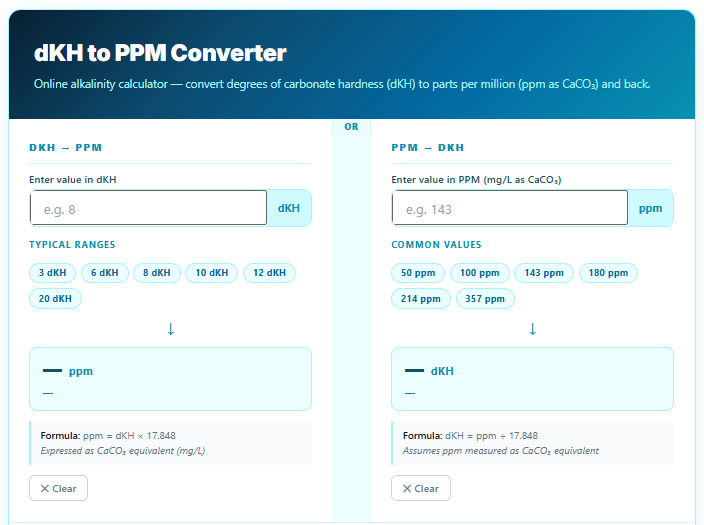
Our Pool Alkalinity Calculator helps you estimate how much product you may need before you raise or lower total alkalinity. Instead of guessing the dose, you can enter your pool size, current alkalinity level, and target alkalinity level to get a more practical starting point.
This is useful because pool alkalinity adjustments should be made carefully. Adding too much baking soda, alkalinity increaser, muriatic acid, or dry acid can push the water too far in the opposite direction. A calculator gives you a clearer estimate, but you should still follow your product label and retest the water after circulation.
Use the calculator after testing your pool with a reliable test kit. Enter your pool volume, current total alkalinity reading, and desired target range. Then add chemicals gradually, run the pump, and retest before making another adjustment.
Step By Step Guide: How to Adjust Pool Alkalinity
The safest way to adjust pool alkalinity is to test, calculate, add chemicals gradually, circulate, and retest. Do not add chemicals based only on water appearance.
1. Test Total Alkalinity and pH
Use a reliable pool test kit or fresh test strips. Test total alkalinity and pH together because one affects the other. CDC notes that pool owners should regularly test and adjust water chemistry, especially chlorine and pH.
2. Decide Whether You Need to Raise or Lower It
If total alkalinity is below the target range, you usually need sodium bicarbonate or an alkalinity increaser. If it is above the target range, you usually need acid and careful retesting.
3. Calculate a Conservative Dose
Use your pool volume, current alkalinity, target alkalinity, and product label. Start with a partial dose when you are unsure. It is easier to add more later than to correct an overdose.
4. Add the Chemical Safely
Follow the product label. When pre-mixing chemicals, HealthLink BC advises adding chemicals to water, not water to chemicals, and using proper safety instructions, gloves, and eye protection when required.
5. Circulate the Pool
Run the pump so the chemical disperses evenly. Avoid retesting immediately after adding chemicals because the reading may not represent the whole pool.
6. Retest Before Adding More
Retest after the product has circulated according to label directions. If the level is still outside range, repeat with another small adjustment.
How to Raise Alkalinity in Pool Water
To raise alkalinity in pool water, add sodium bicarbonate or a pool alkalinity increaser. Baking soda is sodium bicarbonate, and many alkalinity increaser products use the same active ingredient.
Add it in stages, especially if your pool is far below target. Broadcast it across the pool surface if the label allows, run circulation, and retest before adding more. Avoid dumping a large amount in one place because it may settle or create uneven water chemistry.
If your pH is also low, raising alkalinity may lift pH slightly. If your pH is already high, increase alkalinity carefully and retest often so you do not make pH harder to manage.
How to Lower Alkalinity in Pool Water
To lower alkalinity in pool water, use acid carefully and retest before repeating the dose. Muriatic acid and dry acid are common options, but both require label-based dosing and safe handling.
Acid lowers both alkalinity and pH. That is why lowering total alkalinity often requires patience. Pool owners may need to add acid, circulate, aerate if pH drops too low, and retest until both pH and alkalinity settle into range.
Never mix pool chemicals together. Store them safely, keep them away from children, and follow the safety data and label instructions for the exact product you use.
Best Practices for Pool Alkalinity
The best practice is to manage pool alkalinity as part of complete water balance, not as an isolated number. Total alkalinity, pH, sanitizer, calcium hardness, cyanuric acid, water temperature, and source water all affect results.
- Test alkalinity before making large pH corrections.
- Keep a written or digital log of test results.
- Add chemicals in smaller stages instead of one aggressive dose.
- Retest after circulation before making another change.
- Check fill water if alkalinity keeps rising or falling.
- Use a proper alkalinity test kit when strips give confusing results.
A useful routine is to test pH and sanitizer more often, then test total alkalinity weekly or whenever pH becomes unstable. During heavy use, storms, algae treatment, or refill periods, test more often.
Common Mistakes to Avoid
The biggest mistake is adjusting pool alkalinity without testing the full water balance. Many pool owners chase one number and accidentally create another problem.
Adding Baking Soda for Every Cloudy Pool Problem
Cloudy water does not always mean low alkalinity. It may come from poor filtration, algae, high calcium hardness, high pH, low sanitizer, or fine debris.
Lowering pH Without Checking Alkalinity
If you keep adding acid to lower pH but alkalinity stays high, the pH may rebound. Test total alkalinity so you know whether the buffer is causing the issue.
Trying to Fix Everything in One Day
Large chemical swings can overshoot the target. Gradual correction usually produces safer, more predictable results.
Ignoring Product Labels
Different products vary by concentration and instructions. A calculator or rule of thumb should never override the actual label.
Helpful Tips for Easier Pool Alkalinity Control
Small habits make pool alkalinity easier to control. The goal is not to test obsessively, but to catch patterns before they become expensive or frustrating.
- Test after major rain because rain can dilute and shift water balance.
- Retest after adding fill water, especially if your local water is hard or mineral-heavy.
- Use the same testing method for trend tracking when possible.
- Store test strips and reagents away from heat and moisture.
- Do not swim until chemical levels return to safe label-recommended ranges.
If your pool repeatedly drifts high or low, test the water source. The problem may not be your maintenance routine. It may be the chemistry of the water you add to replace splash-out and evaporation loss.
Limitations and Things to Consider
Pool alkalinity does not solve every water problem. It supports pH stability, but it will not remove algae, fix broken filtration, correct high calcium hardness by itself, or replace proper sanitizer management.
Some pools need more careful handling. Plaster pools, saltwater chlorine generator pools, vinyl pools, fiberglass pools, and spas can respond differently to water balance changes. If you see staining, corrosion, persistent scale, cloudy water, or repeated failed adjustments, consider professional water testing.
Chemical safety also matters. Muriatic acid can produce strong fumes, and pool chemicals can react dangerously if mixed. Use protective equipment where required, add chemicals only as directed, and keep all products stored separately and securely.
Related Topics and Internal Links
No strong internal link was used because no sitemap URL or target site pages were provided. If a sitemap is provided later, useful internal links may include pages about pool pH, chlorine levels, pool water testing, pool maintenance, cloudy pool water, and pool chemical safety.
Conclusion
Pool alkalinity is one of the most important water balance numbers because it controls how stable your pH remains. When total alkalinity stays around the proper range, chlorine works more predictably, swimmers feel more comfortable, and pool surfaces and equipment face less stress.
Test before you adjust, make small chemical changes, circulate the water, and retest before adding more. Raise low alkalinity with sodium bicarbonate or alkalinity increaser. Lower high alkalinity with acid and patience. A steady approach prevents the most common mistakes and keeps pool care simpler.
FAQs
What is pool alkalinity?
Pool alkalinity is the water’s ability to resist sudden pH changes. It acts as a buffer, helping pH stay stable when chemicals, rain, swimmers, or debris enter the pool. Total alkalinity is usually measured in parts per million, or ppm.
What should pool alkalinity be?
Pool alkalinity should commonly stay around 80 to 120 ppm for many residential pools. Some sanitizer systems may perform better at a more specific target within that range. Always compare your test result with your product label and pool system guidance.
How do you raise alkalinity in a pool?
You raise alkalinity in a pool by adding sodium bicarbonate or a pool alkalinity increaser. Add a conservative dose based on pool volume, circulate the water, and retest before adding more. Baking soda can raise alkalinity and may slightly affect pH.
How do you lower alkalinity in a pool?
You lower alkalinity in a pool by adding acid, such as muriatic acid or dry acid, according to the product label. Acid can also lower pH, so adjust slowly, circulate the water, and retest before repeating the dose.
Is high alkalinity in a pool dangerous?
High alkalinity is not usually an immediate danger by itself, but it can make pH hard to control. If pH rises too high, chlorine may work less effectively and swimmers may notice irritation, cloudy water, or scale problems.
Does baking soda raise pool alkalinity?
Yes, baking soda raises pool alkalinity because it is sodium bicarbonate. Many alkalinity increaser products use sodium bicarbonate as the main active ingredient. Add it gradually and retest because too much can push alkalinity above the target range.
Can I lower pool alkalinity without affecting pH?
It is difficult to lower pool alkalinity without affecting pH because acid usually lowers both. The practical method is to reduce alkalinity carefully, then restore pH through aeration or small adjustments if needed. Retesting prevents overcorrection.