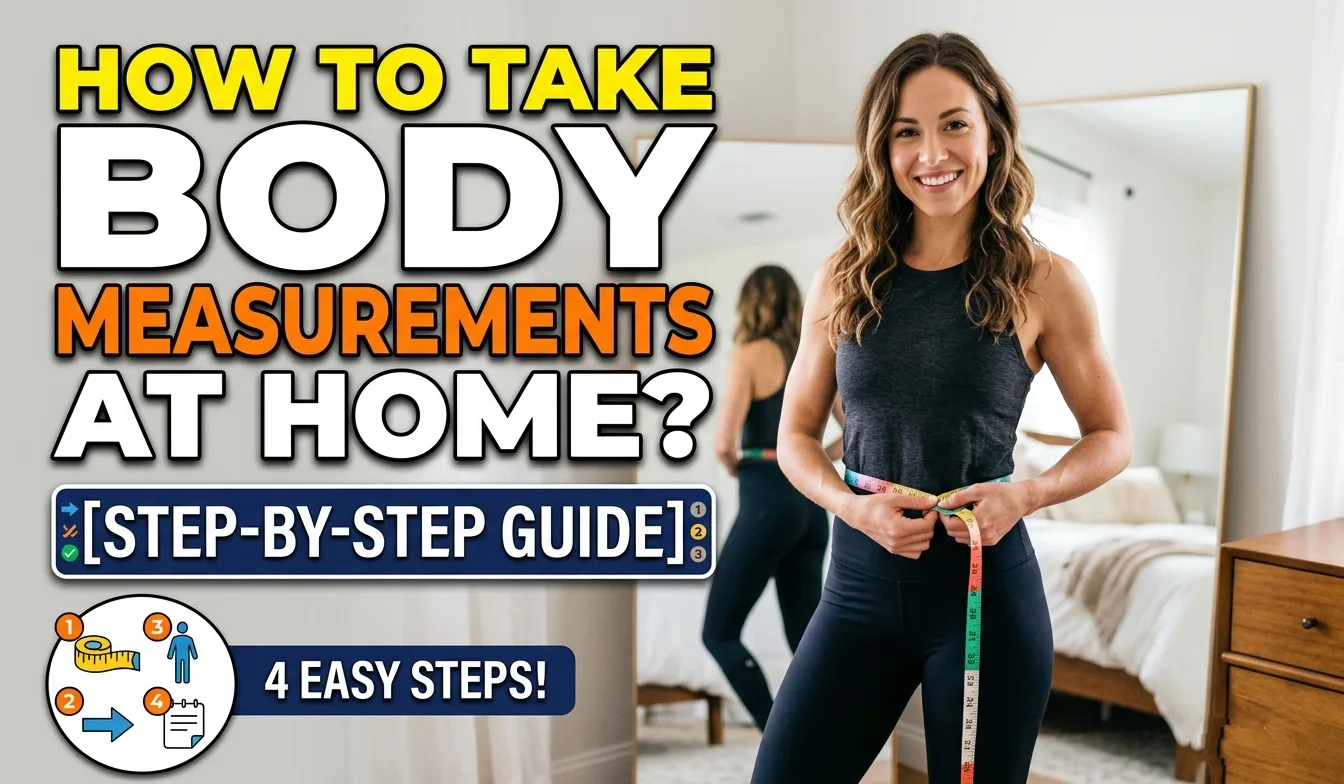
Taking body measurements correctly at home is simple when you use a soft measuring tape, stand naturally, keep the tape level, and measure the same body points each time. Whether you want to track weight loss, fitness progress, gym results, or clothing size, the key is consistency. Measure your bust, chest, waist, hips, arms, thighs, and inseam without pulling the tape too tight.
This guide explains how to take body measurements correctly at home in a clear, beginner friendly way, so you can avoid guessing and start recording numbers you can actually trust.
Quick Answer: How Do You Take Body Measurements Correctly at Home?
To take body measurements correctly at home, use a flexible cloth measuring tape, wear fitted clothing or lightweight undergarments, stand straight, relax your body, and wrap the tape around each area without squeezing the skin. Measure at the same time of day, use the same side of the body, and write every number down immediately.
For health related waist tracking, the National Heart, Lung, and Blood Institute recommends measuring around your middle just above the hip bones after breathing out normally. It also notes that higher waist circumference can be linked with increased health risk.
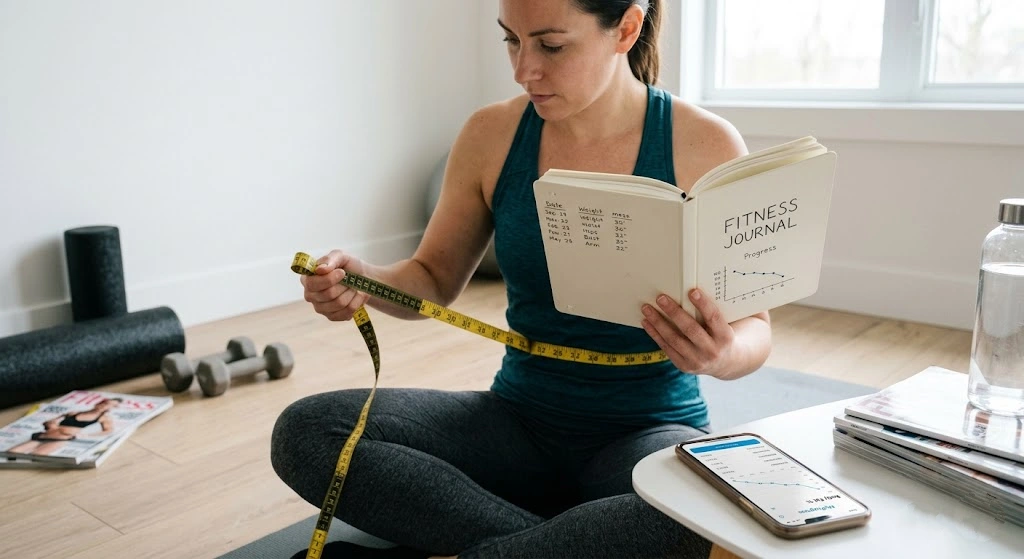
What Are Body Measurements?
Body measurements are the numbers taken around or along different areas of your body, such as your waist, hips, chest, thighs, arms, shoulders, and inseam. These measurements help you understand your body size, clothing fit, and physical progress more accurately than weight alone.
For example, your scale may not change much if you are gaining muscle and losing fat at the same time. In that case, how to take body measurements for fitness becomes useful because your waist, hips, arms, or thighs may show progress before your weight does.
Why Should You Track Body Measurements at Home?
Tracking body measurements at home gives you a clearer picture of body changes. Weight can shift because of water, digestion, hormones, salt intake, and workout recovery. Measurements show shape and size changes that the scale often hides.
This is especially helpful for people searching for how to take body measurements for weight loss because fat loss does not always appear evenly. You may lose inches around your waist or hips before seeing a major drop on the scale. Regular measurements also help with online shopping, custom clothing, gym tracking, and personal confidence.
What Tools Do You Need to Take Body Measurements?
You do not need expensive equipment to learn how to take body measurements correctly at home for beginners. A few simple tools are enough.
Use these items:
- Soft measuring tape for flexible and accurate body wrapping
- Mirror to check that the tape stays level
- Notebook or tracking app to record results
- Fitted clothing so bulky fabric does not change the numbers
- Pen or phone notes for quick measurement logging
A cloth or tailor tape works best. A metal construction tape is not ideal because it bends poorly around curves and can give inaccurate readings.
How Should You Prepare Before Measuring?
Before taking body measurements, choose a quiet space with good lighting and a full length mirror. Wear fitted clothes, gym wear, or undergarments. Stand barefoot on a flat surface, relax your shoulders, and avoid holding your stomach in.
Measure before eating or at least at the same time each day if you are tracking progress. For weight loss and fitness, once every two to four weeks is enough. Measuring every day can create confusion because small body changes happen naturally.
How to Take Body Measurements Correctly at Home Step by Step
Follow this simple process to make your numbers more reliable.
Step 1: Stand Naturally
Stand tall but relaxed. Keep your feet about hip width apart. Do not flex, stretch, suck in your stomach, or push your chest forward. Natural posture gives the most useful measurement.
Step 2: Keep the Tape Level
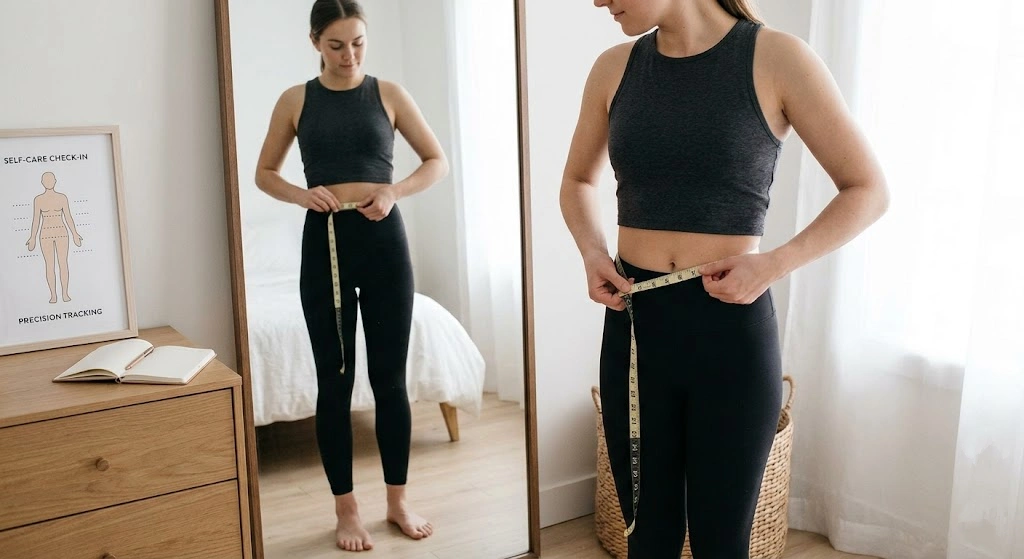
Wrap the tape around the body part you are measuring. Check in the mirror to make sure the tape forms a straight, level circle. A slanted tape can add or remove inches.
Step 3: Keep the Tape Snug but Not Tight
The tape should touch your skin or clothing without pressing into it. If it leaves a mark, it is too tight. If it droops, it is too loose.
Step 4: Breathe Normally
Do not hold your breath. For waist measurement, breathe out naturally and then record the number. This helps you avoid an inflated or reduced reading.
Step 5: Record Immediately
Write down every number as soon as you measure it. Add the date, time, and any useful notes, such as before breakfast or after workout.
How to Take Waist Measurements Correctly?
Your waist is one of the most important body measurements for weight loss, fitness, and health tracking. Stand straight and place the tape around your middle. A common method is to measure just above the hip bones after breathing out normally, keeping the tape parallel to the floor.
Do not measure over thick clothing. Do not pull the tape into your stomach. For consistent tracking, always use the same waist point. Some clothing guides measure the narrowest part of the waist, while health guides often use a point near the hip bones. Choose the method that fits your goal.
How to Take Hip Measurements?
To measure your hips, stand with your feet together and wrap the tape around the widest part of your hips and buttocks. Keep the tape level all the way around your body.
This measurement matters for clothing, weight loss tracking, and body shape changes. If you are learning how to take body size measurements, the hip measurement is essential because jeans, skirts, dresses, leggings, and fitted clothing often depend on this number.
How to Take Chest and Bust Measurements?
For chest or bust measurement, wrap the tape around the fullest part of your chest. Keep your arms relaxed at your sides. Make sure the tape passes under your arms and stays straight across your back.
For women searching how to take body measurements correctly at home female, the bust measurement should be taken while wearing the type of bra normally worn with clothing. For fitness tracking, use the same bra style every time to keep results consistent.
How to Take Shoulder Measurements?
Shoulder measurement is useful for shirts, jackets, dresses, and tailored clothing. Stand straight and measure from the edge of one shoulder to the edge of the other across the back.
If you are alone, this measurement can be tricky. Use a mirror or ask someone to help. For clothing, shoulder width affects how a shirt or blazer sits, especially around the upper body.
How to Take Arm Measurements?
To measure your upper arm, relax your arm at your side and wrap the tape around the fullest part between your shoulder and elbow. Do not flex unless you are intentionally tracking flexed arm size for gym progress.
People searching how to take body measurements for gym often measure both relaxed and flexed arms. That is fine as long as you label them clearly. For example, write relaxed right arm and flexed right arm separately.
How to Take Thigh and Calf Measurements?
For thigh measurement, stand naturally and wrap the tape around the widest part of your upper thigh. Keep your weight evenly balanced on both feet.
For calf measurement, wrap the tape around the widest part of your calf. These measurements are useful for fitness tracking, weight loss progress, boots, leggings, compression wear, and sports clothing.
How to Take Body Measurements for Clothing?
When learning how to take body measurements for clothing, focus on fit based measurements rather than health measurements. Clothing usually requires bust or chest, waist, hips, shoulders, sleeve length, inseam, and sometimes neck size.
For shirts, measure chest, shoulders, sleeve length, and shirt length. For pants, measure waist, hips, inseam, and thigh. For dresses, measure bust, waist, hips, shoulder width, and length. When comparing to a size chart, check whether the brand uses body measurements or garment measurements because they are not the same.
How to Take Measurement for Ladies Shirt?
To learn how to take measurement for ladies shirt, measure the bust, waist, shoulders, sleeve length, and shirt length. Start with the bust by wrapping the tape around the fullest part of the chest. Then measure the natural waist and shoulder width.
For sleeve length, measure from the shoulder point down to the wrist. For shirt length, measure from the top of the shoulder down to the preferred ending point. This helps you choose a better fit for formal shirts, casual tops, tunics, and custom stitched clothing.
How to Take Body Measurements for Weight Loss?
If your goal is weight loss, measure your waist, hips, chest, upper arms, thighs, and calves. These areas often show visible body changes. Record your results every two to four weeks instead of every day.
For how to take body measurements correctly at home for weight loss, consistency matters more than perfection. Use the same tape, same body points, same posture, and same time of day. This makes your progress easier to compare.
How to Take Body Measurements for Fitness?
For fitness, track areas that match your goals. If you are building muscle, measure arms, chest, shoulders, thighs, and calves. If you are reducing fat, measure waist, hips, chest, and thighs.
People searching how to take body measurements for fitness should also record workout changes, strength progress, energy levels, and clothing fit. Measurements are useful, but they work best when combined with photos, performance notes, and healthy habits.
How Often Should You Take Body Measurements?
For most people, every two to four weeks is ideal. This gives your body enough time to show real change. Weekly measuring is acceptable if you do not become stressed by small fluctuations.
Avoid measuring several times a day. Your body size can change slightly after meals, workouts, hydration shifts, and digestion. For accurate tracking, choose one routine and repeat it.
What Is the Best Time to Take Body Measurements?
The best time is usually in the morning before eating, after using the bathroom, and before exercise. This gives a more consistent baseline.
If mornings do not work for you, choose another time and stick with it. The goal is not to find the smallest number. The goal is to create consistent body measurements that help you track real changes.
Can You Take Body Measurements Without a Measuring Tape?
You can estimate body measurements without a soft tape, but it will not be as accurate. Use a non stretchy string, ribbon, or belt, wrap it around the body part, mark the point, and then measure the length with a ruler.
This can help when you search how to take body measurements correctly at home without a tape measure. Still, if you plan to track weight loss, gym progress, or clothing sizes, a soft measuring tape is worth buying because it is cheap and more reliable.
Take Control of Your Body Tracking
Ready to streamline your body measurement tracking? The Body Type Calculator is here to help. This tool is designed to quickly calculate your body type based on your personal measurements, making it easier than ever to monitor your fitness progress, weight loss, or find the perfect clothing fit. As part of the Generators and Converters website, this tool offers a seamless experience with reliable, accurate results. Whether you’re tracking your progress or simply curious about your body composition, start using the Body Type Calculator today for a more precise and insightful approach to body measurements.
Common Mistakes to Avoid When Taking Body Measurements
Small mistakes can make your numbers misleading. Avoid these common errors:
- Pulling the tape too tight
- Measuring over bulky clothing
- Measuring different points each time
- Holding your breath
- Standing with poor posture
- Measuring right after a heavy meal
- Comparing your numbers to someone else’s body
- Forgetting to record the date
The biggest mistake is changing your measuring method. If your first waist measurement is taken at the narrowest point, your next waist measurement should use the same point.
Pro Tips for More Accurate Body Measurements
Use a mirror whenever possible. It helps you keep the tape straight around your back, hips, and thighs. If you cannot see the tape clearly, take a quick photo from the side or ask someone you trust to help.
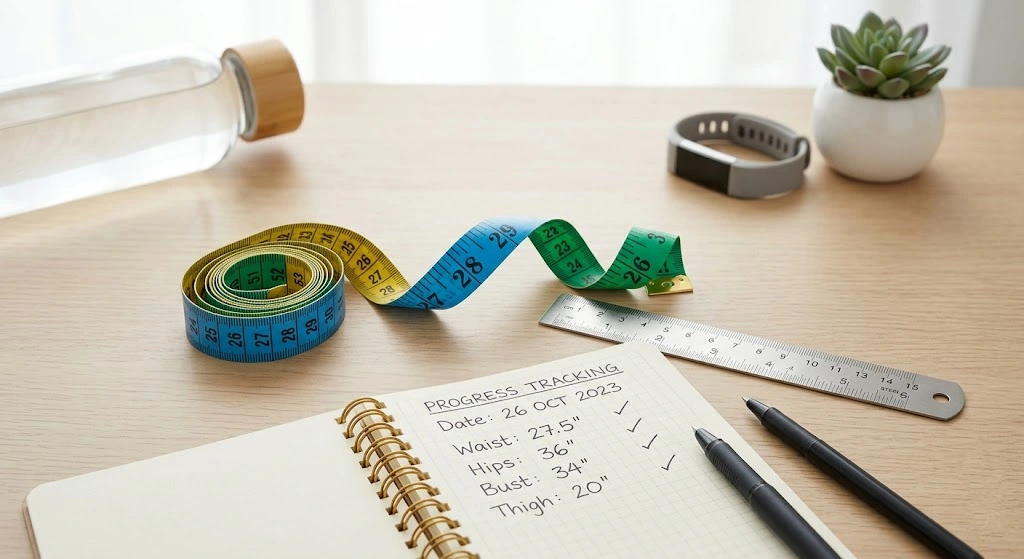
Keep a simple tracking sheet with columns for date, waist, hips, chest, arms, thighs, calves, and notes. Do not panic over tiny changes. A half inch difference can happen because of water retention, bloating, posture, or tape placement.
What Should You Do With Your Body Measurement Results?
Use your body measurements to make better decisions. For clothing, compare them with the brand’s size chart before buying. For weight loss, look for gradual changes over several weeks. For fitness, compare measurements with strength, endurance, and body composition goals.
If waist measurement is your health focus, remember that it is only one marker. A healthcare professional can help interpret your numbers alongside weight, blood pressure, cholesterol, blood sugar, lifestyle, and family history.
Conclusion
Learning how to take body measurements correctly at home helps you track weight loss, fitness, clothing size, and body changes with more confidence. Use a soft tape, stand naturally, keep the tape level, and measure the same points every time.
The best results come from consistency, not perfection. Choose your measurement routine, record your numbers, and compare progress over weeks rather than days. Whether your goal is better fitting clothes, gym progress, or weight loss tracking, accurate body measurements give you a practical way to understand your body without guessing.
FAQ About Body Measurements
How do I take body measurements correctly at home for beginners?
Start with a soft measuring tape, fitted clothing, and a mirror. Measure your chest or bust, waist, hips, arms, thighs, and calves. Keep the tape level, snug, and comfortable. Record each number immediately with the date.
How do I take body measurements for weight loss?
Measure your waist, hips, chest, upper arms, thighs, and calves every two to four weeks. Use the same body points each time. This helps you track fat loss even when the scale does not change much.
How do I take body measurements for clothing?
For clothing, measure the areas needed by the size chart. Common measurements include chest or bust, waist, hips, shoulders, sleeve length, inseam, and garment length. Always compare your numbers with the specific brand’s chart.
How do I take body size measurements without help?
Use a mirror and a flexible tape. For hard areas like shoulders or back length, use a wall mirror or phone camera timer to check tape position. If accuracy matters for tailoring, ask another person to help.
Should body measurements be taken tight or loose?
The tape should be snug, not tight. It should touch the body without squeezing the skin. If the tape digs in or leaves a mark, loosen it slightly.
How do I take the size of my body for gym progress?
For gym progress, measure arms, chest, shoulders, waist, hips, thighs, and calves. Track both size changes and strength improvements. Muscle gain and fat loss can happen at the same time, so measurements give better context than weight alone.